'600년전 불상·스페인 스톤헨지'..가뭄에 드러난 유적들
Yangtze River waters reveal Buddhist statues
'Spanish Stonehenge' emerges from drought-hit dam
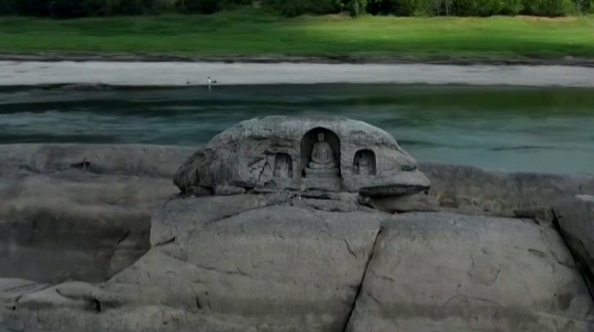
Yangtze River waters reveal Buddhist statues...
Plunging water levels of the Yangtze River have revealed a submerged island in China's southwestern city of Chongqing and a trio of Buddhist statues on it that are believed to be 600 years old, state media Xinhua has reported.
양쯔강의 수위가 급강하 하면서 중국 남서부 충칭의 물에 잠긴 섬과 600년 된 것으로 추정되는 3개의 불상이 드러났다고 중국관영 신화통신이 보도했습니다.
** submerge - 잠수하다, 물[액체] 속에 잠기다
The three statues were found on the highest part of the island reef called Foyeliang, initially identified as built during the Ming and Qing dynasties. One of the statues depicts a monk sitting on a lotus pedestal.
3개의 불상은 처음에 명나라와 청나라 시대에 지어진 것으로 확인된 (Foyeliang)이라고 불리는 섬 암초의 가장 높은 부분에서 발견되었습니다. 그 중 한 조각상은 연꽃 받침대에 앉아있는 승려를 묘사하고 있습니다.
** reef - 암초
** identified - 확인된, 인정된, 식별된
** depict - 그리다, 묘사하다
** pedestal - (기둥·동상 등의) 받침대
The Yangtze's water levels have been falling rapidly due to a drought and a heatwave in China's southwestern region.
중국 남서부 지역의 가뭄과 폭염으로 양쯔강의 수위가 급격히 떨어지고 있습니다.
Rainfall in the Yangtze basin has been around 45% lower than normal since July, and high temperatures are likely to persist for at least another week, official forecasts said.
양쯔강 유역의 강우량은 7월 이후 평년보다 약 45% 감소했으며 고온현상은 적어도 일주일 더 지속될 가능성이 있다고 공식 예보되었습니다
As many as 66 rivers across 34 counties in Chongqing have dried up, state broadcaster CCTV said on August 19.
8월 19일 국영 CCTV에 따르면 충칭의 34개 현에 걸쳐 66개의 강이 말라 버렸다고 말했습니다.
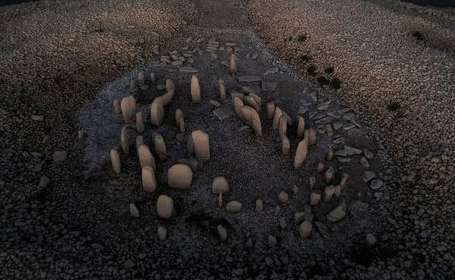
Severe Droughts Have Revealed the ‘Spanish Stonehenge,’ a Remarkable Ancient Rock Formation That’s Almost Always Underwater
The prehistoric site was flooded by the creation of a reservoir in 1963.
극심한 가뭄으로 거의 항상 물 속에 있는 놀라운 고대 암석인 '스페인 스톤헨지'가 드러났습니다.
선사시대 유적지는 1963년 저수지가 만들어지면서 침수되었습니다.
**Remarkable - 놀랄 만한, 놀라운, 주목할 만한
** prehistoric - 선사 시대의
: of, relating to, or existing in the time before people could write
** reservoir - 저수지
It currently sits fully exposed in one corner of the Valdecanas reservoir, in the central province of Caceres, where authorities say the water level has dropped to 28% of capacity.
현재 중부 카세레스(Caceres) 지방의 발데카나스(Valdecanas) 저수지 한 구석에 완전히 노출되어 있으며 당국은 수위가 수용량의 28%로 떨어졌다고 밝혔습니다.
As Europe experiences its worst drought in 500 years, diminished water levels rural Spain have revealed the Dolmen of Guadalperal, a normally submerged monument known as the Spanish Stonehenge.
유럽이 500년 만에 최악의 가뭄을 겪고 있는 가운데, 수위가 낮아진 스페인 시골 지역은 스페인 스톤헨지로 알려진 물에 잠긴 기념물인 과달페랄의 고인돌을 드러냈습니다.
A prehistoric circle of nearly 100 stone megaliths, the site is believed to date to 5,000 BCE. A dolmen is a prehistoric structure of two or more upright megaliths called menhirs, with a capstone laid on top; many were used as tombs.
거의 100개의 거대한 석조로 이루어진 선사 시대의 원형 유적지로, 그 유적지는 기원전 5,000년으로 추정됩니다. 고인돌은 맨히르라고 불리는 두 개 이상의 직립 거석으로 된 선사 시대 구조로 그 위에 관석이 놓여 있습니다. 무덤으로 사용되었습니다.
** upright - 수직으로[똑바로] 세워 둔
** megalith - (고대인들이 세운) 거석
** capstone - 관석
: a large flat stone forming a roof over the chamber of a megalithic tomb.
Like its more famous U.K. counterpart, the Spanish Stonehenge has mysterious origins. It may have been built in alignment with the summer solstice, as a solar temple. Some of its stones feature carvings, including a menhir with a curved line that could represent a snake, or a map of the nearby Tagus River.
더 유명한 영국의 스톤헨지와 마찬가지로 스페인의 스톤헨지는 신비한 기원을 가지고 있습니다. 그것은 태양 사원으로 하지에 맞춰 지어졌을 수 있습니다. 일부 돌에는 뱀을 나타낼 수 있는 곡선이 있는 멘히르나 근처 타구스 강의 지도를 포함하여 조각이 되어 있습니다.
 홈 > 영어컨텐츠 > Today's Issue